
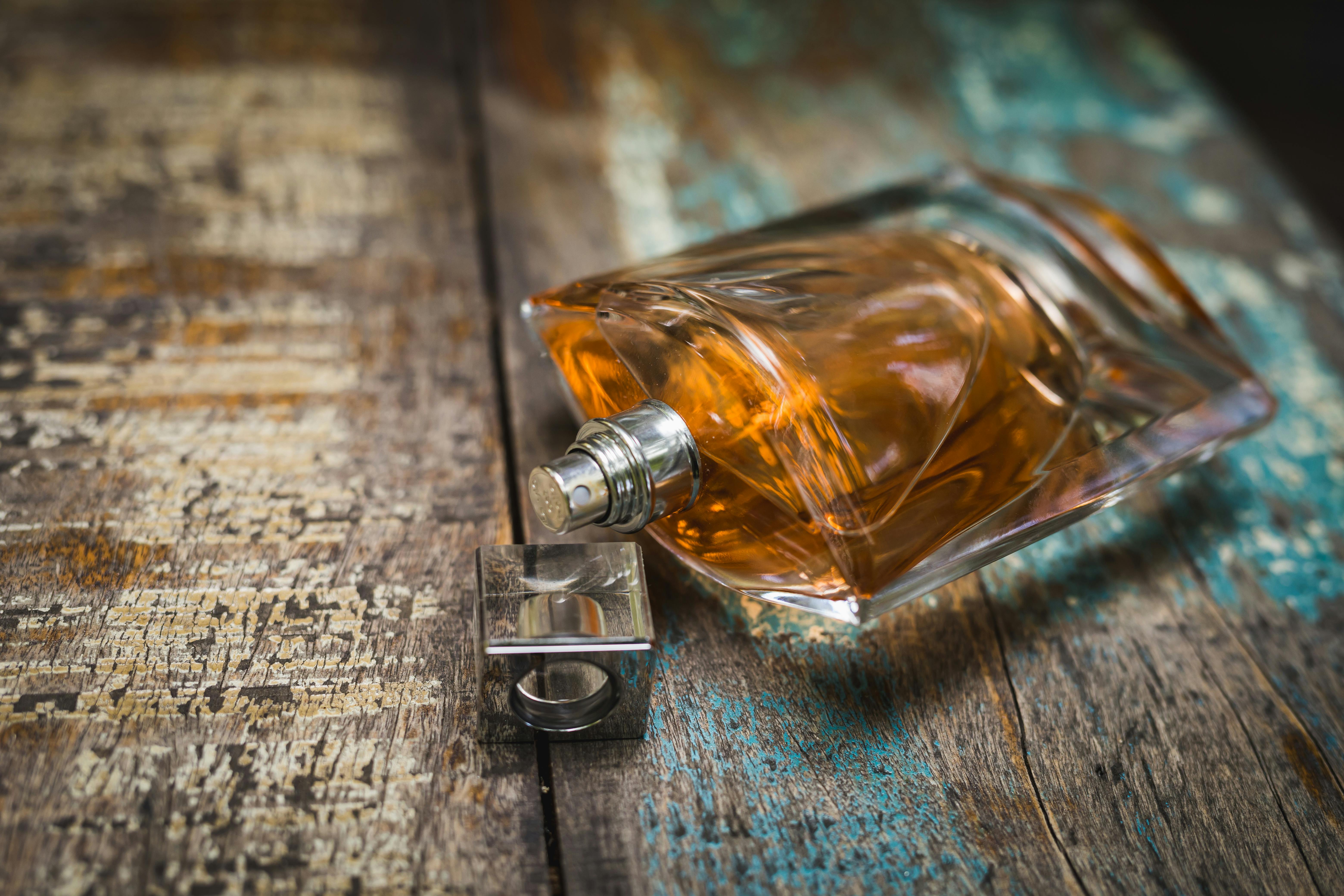
Layering two fragrances is common practice and rarely produces the sum of the two. What reaches the nose is decided by evaporation rates rather than by the proportions applied.
Why evaporation rate governs the result
A fragrance is a mixture of molecules with different volatilities. Light molecules leave the skin quickly, heavy ones remain for hours, and the perceived scent shifts as that mixture changes.
When two fragrances are worn together, their volatile fractions compete for the same moment. The lightest molecules from both dominate the first minutes regardless of intent.
Later, the slowest molecules from each remain, so the combination that lingers may be one neither wearer anticipated from smelling the bottles.
How shared materials amplify each other
Commercial perfumery draws on a limited palette of workhorse materials, so two unrelated fragrances often contain several of the same molecules.
Where they overlap, concentrations add. A material present at a moderate level in each can reach a level in combination that reads as harsh or synthetic.
This is why layering two scents from the same broad family sometimes fails while pairing scents from distant families succeeds.
Why masking is not the same as blending
Human olfaction adapts quickly to a continuous stimulus, and a strong note suppresses the perception of weaker ones alongside it.
A powerful material can therefore hide a second fragrance almost entirely rather than combining with it. The second scent is present and simply not being perceived.
People around the wearer may perceive it differently, because they encounter the scent intermittently and do not adapt in the same way.
How skin changes the equation
Fragrance evaporates from a warm, slightly oily surface. Skin temperature, surface oil and pH all influence how fast individual molecules leave.
Oilier skin holds heavier molecules longer, which shifts a layered combination toward its base notes. Dry skin releases everything faster and compresses the sequence.
Applying one fragrance to skin and the other to clothing separates the two surfaces and gives a more predictable result than mixing both on the same spot.
Why order of application matters less than expected
Applying one scent before another does not create a layer in any physical sense. Both are thin films of alcohol and oil that dry within a minute.
Once the alcohol has evaporated, the remaining materials sit together on the skin and evaporate according to their own volatility, not their order of arrival.
Fragrance applied to broken or irritated skin can cause stinging and reaction, and persistent rash after fragrance use belongs with a dermatologist rather than a change of scent.