
Aftershave is now largely thought of as a fragrance, but the category began as a functional product with a specific job that explains its enduring characteristics.
Shaving creates small wounds
A blade passing across skin removes hair and also takes surface cells with it, leaving an abraded layer and, frequently, small breaks in the skin.
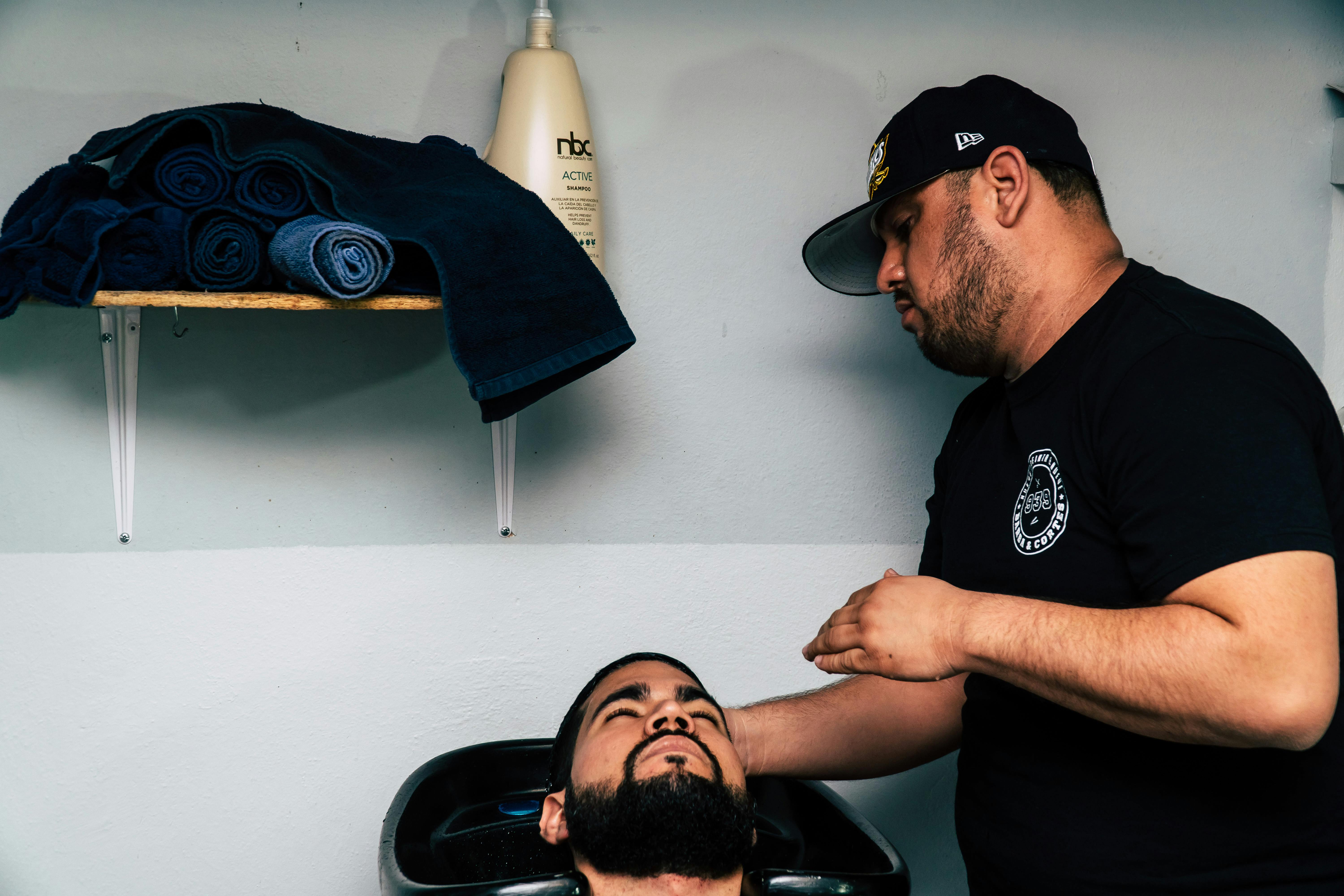
Before disposable safety razors, shaving was often done at barbershops with straight razors, and the same blade served many customers across a day.
That combination made post-shave disinfection a genuine hygiene concern rather than a comfort measure, and the products of the period were built around it.
Alcohol was the practical antiseptic
High-strength alcohol kills a wide range of organisms on contact, evaporates quickly and requires no rinsing, which made it a natural base for the purpose.
It also happened to be an excellent carrier for fragrance materials, which is why aftershaves were scented from the beginning rather than as a later addition.
The sting is simply alcohol contacting broken skin, and its persistence in the category has more to do with expectation than with any benefit.
Astringency became a selling point
Alcohol and witch hazel both cause tissue to contract slightly, which was described as tightening the skin and closing pores after shaving.
Pores do not open and close in any muscular sense, so the effect is a temporary reduction in the visible size of the opening rather than a seal.
The same contraction does slow minor bleeding from shaving nicks, which is a real if modest function and the basis of the alum block.
Why balms displaced the splash
Freshly shaved skin has lost part of its lipid layer along with the surface cells, so it loses water faster and is more sensitive to whatever is applied.
Alcohol accelerates that water loss rather than reducing it, which leaves the skin drier a few hours later even though it feels clean immediately.
Balms and lotions replace the antiseptic emphasis with emollients and soothing ingredients, treating the shave as an irritation to be settled rather than a wound to be disinfected.
What the word now describes
Aftershave today usually indicates a lightly concentrated scented product rather than a functional category, and it sits at the weaker end of the fragrance scale.
Because the concentration is low, these products fade faster than an eau de toilette, which is why they are often reapplied through the day.
The functional descendants of the original are now sold separately as post-shave balms, gels and tonics, with the antiseptic role largely retired.