
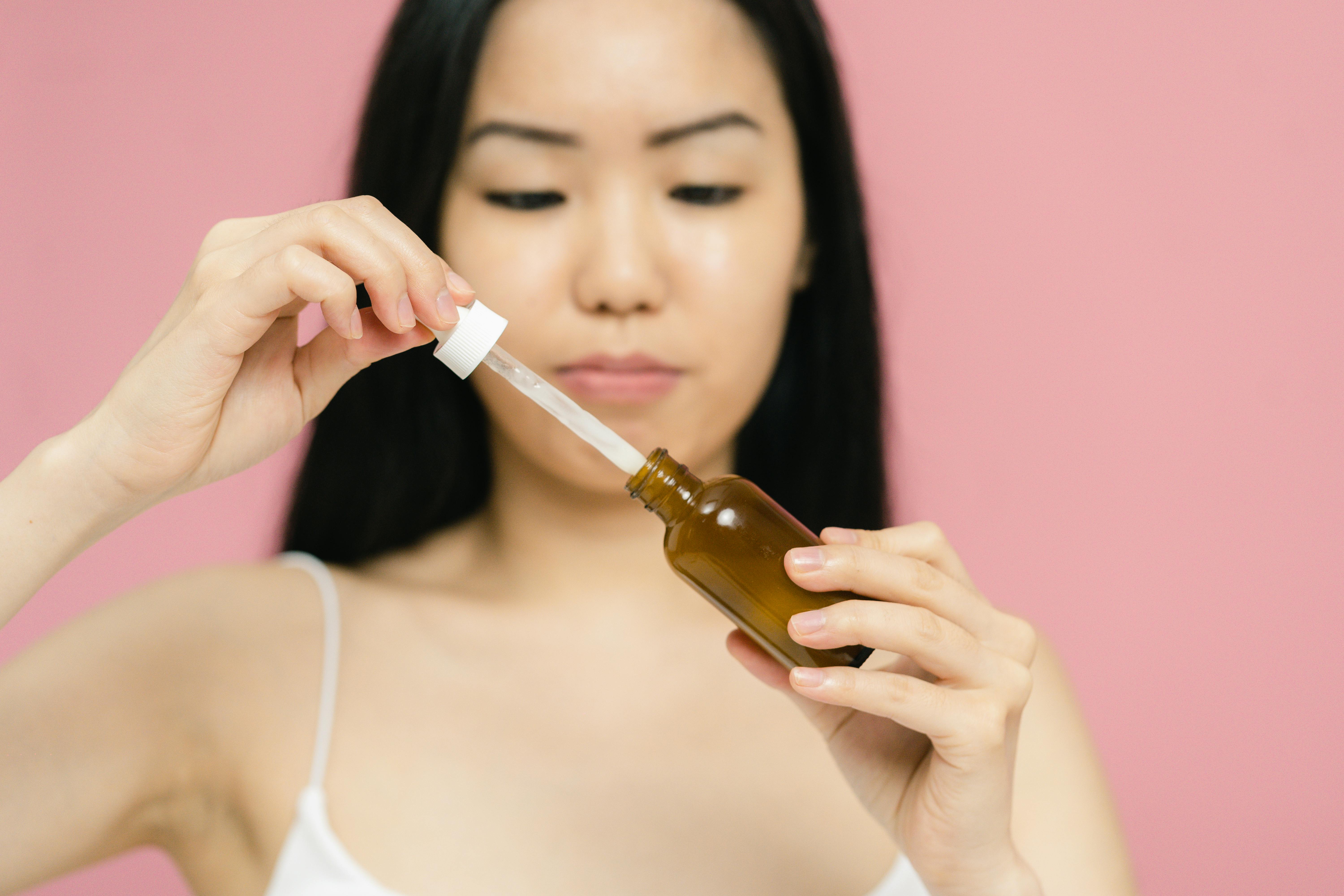
Peptide appears on packaging as though it names a single ingredient. It describes a class of molecules whose behaviour varies completely depending on the sequence involved.
What a peptide is
Amino acids are the units from which proteins are built, and a peptide is a short chain of them, typically far shorter than a functional protein.
Collagen and keratin are proteins made of thousands of these units, so a peptide can be thought of as a fragment rather than a complete structure.
The specific order of the amino acids determines what the chain does, which is why two peptides can share a name category and have unrelated effects.
Signalling is the main proposed mechanism
Skin cells communicate through molecules that bind to receptors and prompt a response, and certain peptide fragments resemble those signalling molecules closely enough to be recognised.
Fragments produced when collagen breaks down appear to act as one such signal, indicating to the surrounding cells that repair is needed.
Supplying similar fragments topically is intended to prompt that response in the absence of actual damage, which is the reasoning behind signal peptides.
Other peptide types work differently
Carrier peptides are used to transport trace elements such as copper into the skin, where those elements participate in enzyme activity and wound healing.
Enzyme-inhibiting peptides aim to slow the breakdown of existing structural proteins rather than to increase their production.
A separate group targets the signalling between nerves and muscle, which is the basis for products marketed around expression lines.
Penetration is the central difficulty
The outer skin layer is built to exclude water-soluble molecules, and peptides are both water-soluble and larger than the ingredients that cross it easily.
Formulators attach fatty acid chains to improve compatibility with the lipid barrier, which is why many peptide names in ingredient lists begin with a fat-related prefix.
How much reaches the living layers in practice remains the main open question, and it varies considerably between formulas containing the same named peptide.
How to read a peptide claim
The named peptide matters more than the category, since the evidence behind individual sequences differs widely and does not transfer between them.
Concentration matters too, and a peptide listed at the very end of an ingredient list is present at levels unlikely to match the research it is associated with.
Peptides are generally well tolerated, which makes them a common choice for skin that reacts to retinoids or acids, though the effects are correspondingly gradual.