
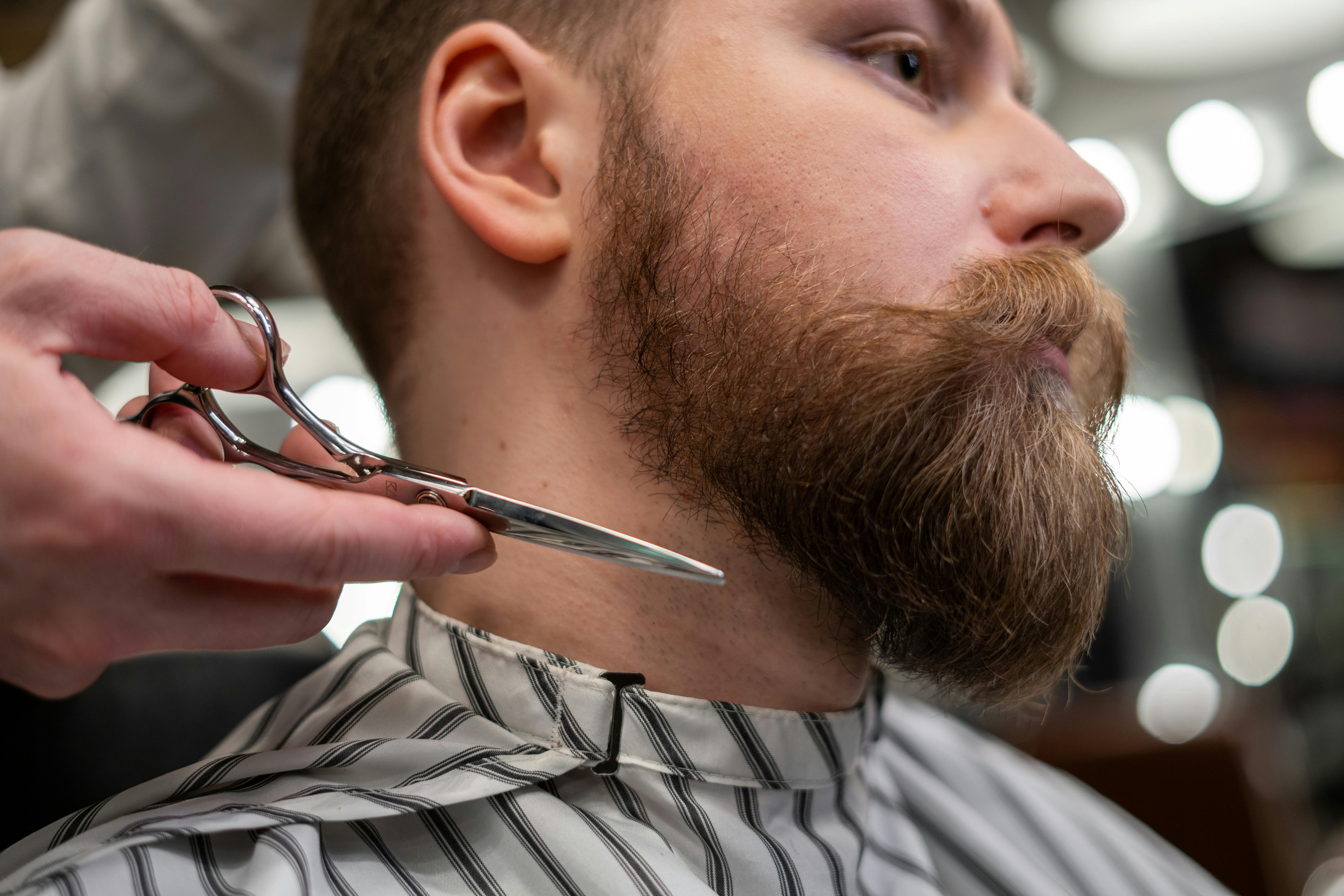
The hot towel is the most recognizable part of a traditional barbershop shave and is often read as theater. It performs a measurable mechanical function on the hair.
What water does to a hair shaft
Keratin, the protein that makes up hair, is held in shape partly by hydrogen bonds. Water molecules interfere with those bonds and the structure loosens.
A fully hydrated whisker becomes considerably easier to cut than a dry one. The force required at the blade edge falls, and the cut is cleaner.
Facial hair is among the coarsest on the body, with a diameter close to that of copper wire in some men, which is why the difference is noticeable.
Why heat accelerates the process
Hydration takes time. Warm water penetrates the cuticle faster than cold, so a heated towel achieves in a few minutes what a cold cloth would take longer to do.
Heat also relaxes the small muscles attached to each follicle and increases local blood flow, which softens the surrounding skin surface.
The towel is applied in contact with the whole face, holding moisture against the skin rather than allowing it to evaporate as it would in open air.
What the pre-shave oil adds
Oil applied under the towel does not hydrate. It forms a film that slows evaporation, keeping the hydration achieved during the towel step in place.
It also reduces friction between the blade and the skin surface, which matters because much of the irritation from shaving comes from drag rather than from the cut itself.
Lather then sits on top of that film, holding water at the hair and marking which areas have been passed over.
Why the effect fades quickly
Hydration reverses as water evaporates, and a whisker begins stiffening within minutes of leaving the towel.
This is the reason a traditional shave proceeds in sections and why the towel is often reapplied between passes rather than used once at the start.
Shaving straight after a hot shower works on the same principle, and shaving as the last step rather than the first is the practical version of it.
Where heat becomes a problem
Towels heated beyond comfortable tolerance can scald, and skin flushed by heat bleeds more readily from any nick.
Conditions including rosacea and active eczema are aggravated by heat, and shaving over inflamed skin compounds the irritation rather than easing it.
Persistent bumps along the jaw and neck, painful lesions or spreading redness after shaving are worth a dermatologist's assessment rather than another product.