
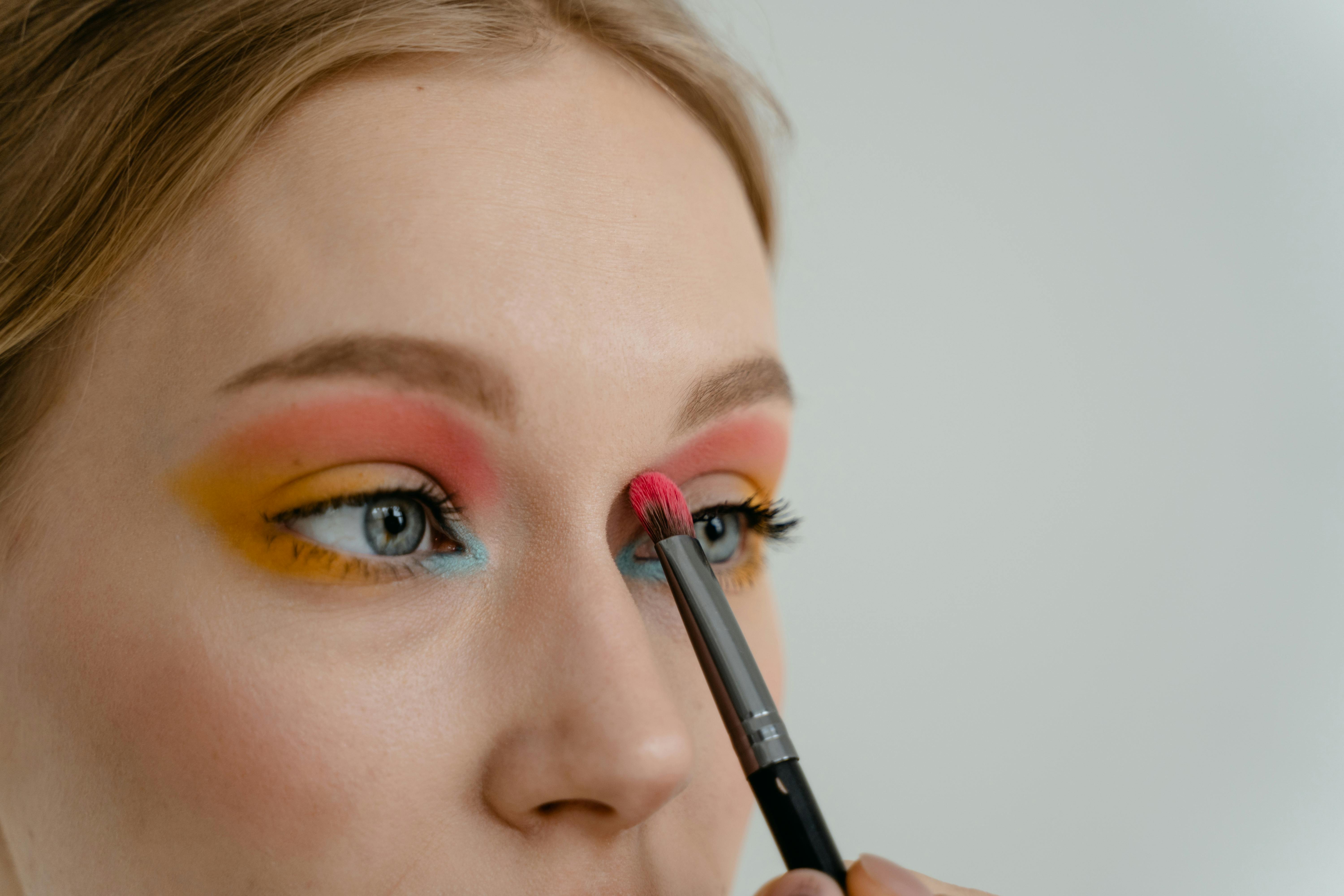
Concealer settling into lines under the eye is the most common complaint in base makeup. The mechanism is mechanical, and it explains why most of the usual fixes work.
The skin there is thin and constantly moving
Under-eye skin is among the thinnest on the body, with minimal fat beneath it and a dense network of fine expression lines.
The area moves with every blink, smile and squint, which amounts to a very large number of small folding movements across a day.
Any layer sitting on that surface is folded repeatedly, and a layer that cannot flex with the skin gathers at the fold instead.
Thickness is the primary variable
A thin film flexes with the skin and returns to shape, while a thick one has more material than the fold can accommodate and is pushed into the crease.
Once product has collected in a line it stays there, since the movement that pushed it in does not push it back out.
This is why applying less and building gradually consistently outperforms a single heavy application, regardless of which product is used.
Emollients keep the layer mobile
Concealers containing more oils and emollients stay softer for longer, which improves blending but also means the film never fully sets in place.
A film that remains mobile migrates with movement, so richer formulas crease faster even when they look better on application.
Drier, more matte formulas set into a fixed film and resist migration, at the cost of emphasising texture and dryness underneath.
Whatever is underneath matters too
Heavy eye cream applied immediately beforehand adds a slippery layer beneath the concealer, which allows the product above it to slide.
Applying eye cream well in advance and blotting the excess leaves the hydration without the mobile surface film.
Dry, flaking skin causes the opposite problem, gripping product unevenly so the layer is thicker in some places and cracks along the dry patches.
Under-eye texture also changes through the day as fluid shifts and the area becomes less puffy, so a layer that sat smoothly in the morning may not by afternoon.
What setting powder actually does
A light dusting of powder absorbs surface oil and reduces the mobility of the film, which slows migration rather than preventing it.
Too much powder creates its own problem, since powder collecting in fine lines is as visible as concealer doing the same.
The practical approach is the thinnest workable layer of both, placed only where coverage is genuinely needed rather than across the whole area.