
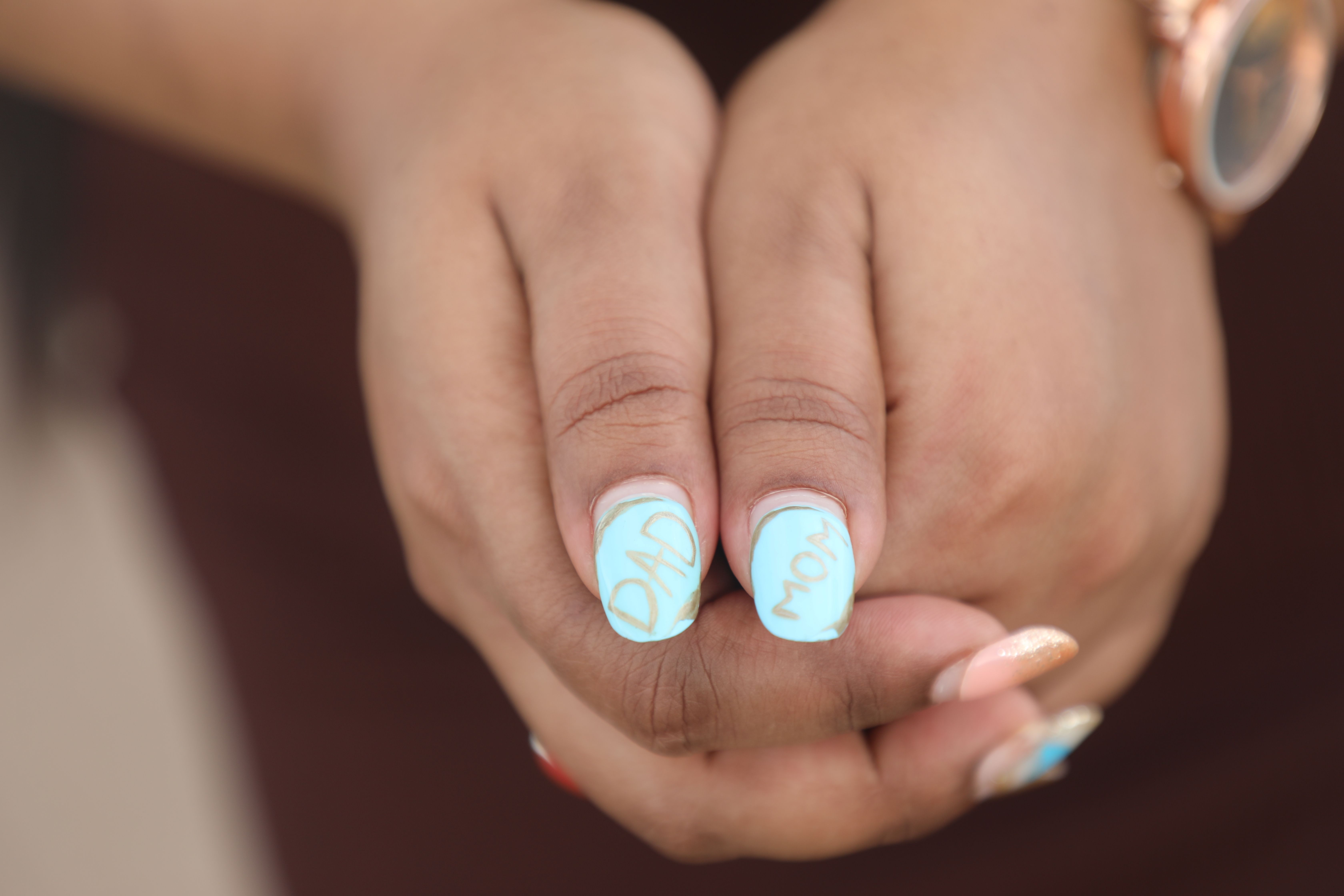
Gel manicures rarely fail evenly. The separation starts at the cuticle line, and three separate factors converge on that specific area.
Adhesion depends on a clean, dry surface
Gel bonds to the nail plate mechanically and chemically, and both routes require direct contact with keratin rather than with anything resting on it.
The nail plate is naturally slightly oily, and the area nearest the cuticle receives the most oil because that is where the surrounding skin is closest.
Dehydrating and priming steps exist to remove that film. If they are rushed or if the hand is touched afterwards, the base coat lands on oil rather than nail.
Product touching skin breaks the seal
Gel applied so that it contacts the cuticle or the side walls cannot cure into a sealed edge, because skin moves and the nail does not.
Even a very small overlap creates a lifted margin. Once there is an edge to catch, ordinary hand use levers it further open.
This is why careful technicians leave a visible hairline gap around the entire perimeter, which looks like imprecision but is the opposite.
Growth works against the base
The nail plate advances continuously from beneath the cuticle, carrying the cured gel forward with it as a rigid sheet.
New nail emerging at the base has no product on it, so a step forms at the boundary where the gel begins.
That step concentrates stress at exactly the point where adhesion is already weakest, which is why lifting becomes visible within a few weeks rather than immediately.
Water and flexing widen the gap
The nail plate absorbs water and swells slightly, then contracts as it dries. Cured gel does not move with it, so the two separate microscopically at the margin.
Frequent hand washing, swimming and washing up accelerate this, since each cycle repeats the expansion and contraction.
Once water sits underneath a lifted edge it also creates conditions for microbial growth, which is the reason lifting should not simply be filed over and repainted.
Why removal matters as much as application
Picking or peeling gel takes layers of nail plate with it, leaving a thinner and rougher surface that the next application adheres to less well.
Each cycle of damage therefore makes the following manicure more likely to lift, which is how people conclude that gel has permanently ruined their nails.
Proper removal softens the product with solvent so it lifts away from the plate rather than off it, which preserves the surface for the next application.