
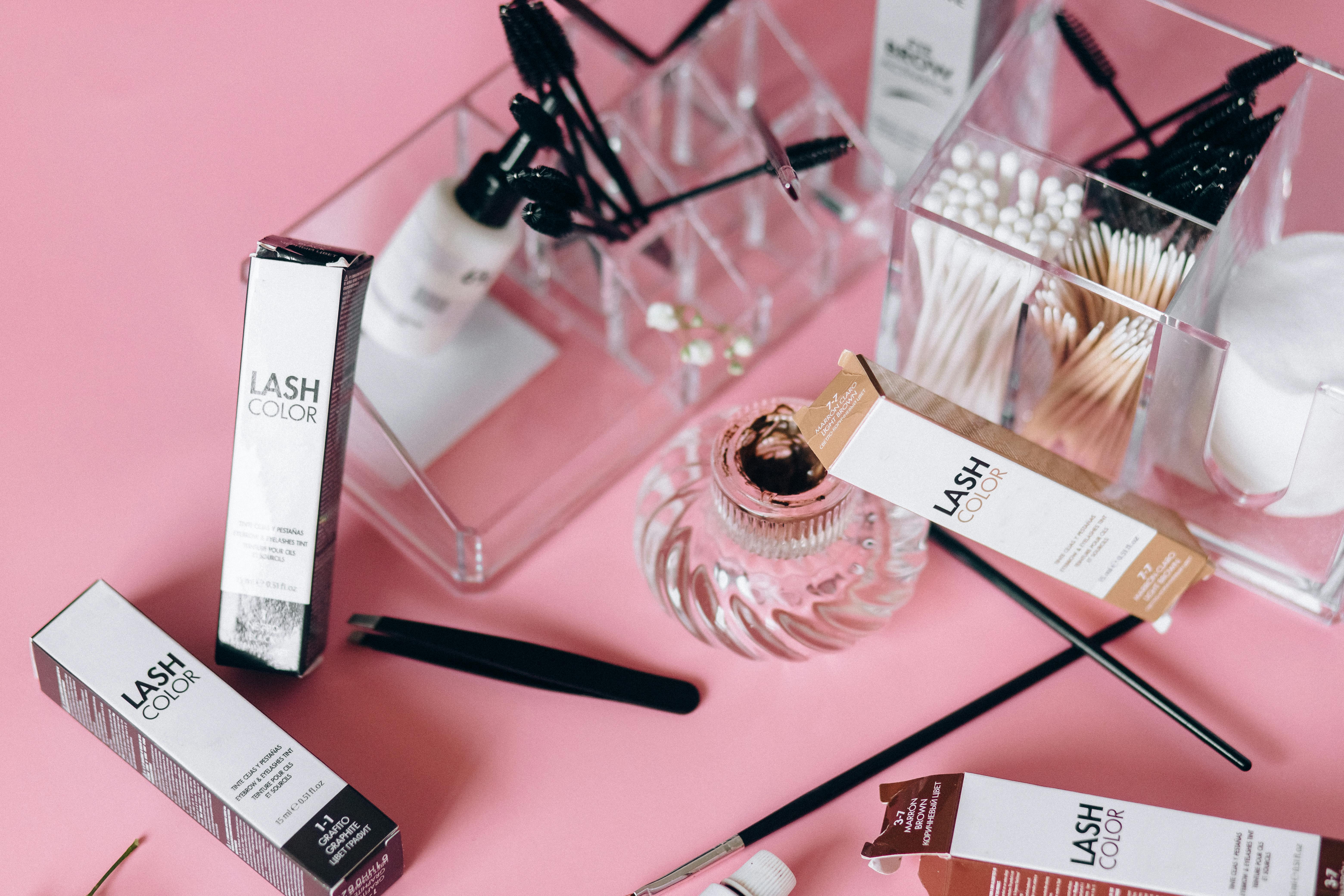
Preservative-free appears on a growing share of beauty packaging, particularly on products positioned as natural. In most cases the microbial problem has been solved differently rather than avoided.
Why water creates the requirement
Bacteria, yeast and mold need available water to grow. A cosmetic emulsion sitting at room temperature and repeatedly opened provides both moisture and nutrients.
Contamination is not visible at the levels that matter. A product can carry a substantial microbial load with no change in appearance, texture or smell.
Manufacturers test this directly with challenge testing, deliberately inoculating a formula with organisms and measuring whether their numbers fall over a set period.
How the term is used loosely
Preservative is not a strictly defined labeling category in the United States, so a manufacturer can describe a product by which specific substances it excludes.
A formula free of parabens and formaldehyde releasers may contain other materials that perform the same function, sometimes listed as fragrance or skin-conditioning agents.
Multifunctional ingredients complicate this further. Certain glycols, alcohols and organic acids provide antimicrobial protection while also serving another declared purpose in the formula.
What genuine alternatives look like
Anhydrous products containing no water, such as oil balms, powders and pressed pigments, have very little available water and can be formulated without a conventional preservative.
High concentrations of certain humectants bind water and reduce what is available to organisms, an approach borrowed from food preservation using sugars and salts.
Low pH suppresses many organisms, which is why some acidic formulations require less preservative than a neutral cream of similar composition.
How packaging substitutes for chemistry
Airless pumps and sealed single-dose units prevent air and fingers from reaching the remaining product, which removes the main contamination route.
Some products are sold refrigerated or with a very short stated life for the same reason, treating the formula more like a perishable than a cosmetic.
These approaches shift cost into packaging and distribution, which is part of why such products are priced above conventional equivalents.
Where the risk falls on the user
Jars dipped into with fingers introduce far more contamination than a pump, and diluting a product with water at home defeats whatever protection exists.
Eye-area products and anything applied near broken skin carry the highest consequence if contaminated, which is why their handling deserves the most care.
Eye pain, discharge or spreading skin infection after using a cosmetic is a matter for a physician, and the product should be discarded rather than saved for evidence.